Anyone who has lived through a hurricane season in Eastern North Carolina knows what a long outage feels like. The well pump stops, and the food in the freezer starts to go. After a storm like that, a lot of people start looking at generators. The first question is usually which kind to get.
There are two main choices for a home. A portable generator runs on fuel you add, sits outside and gets hooked up when you need it. A standby generator is installed permanently next to the house and starts on its own when the power goes out. Both work well when they’re sized and hooked up right. Which one fits depends on your budget and how much of the house you want to keep running.
How a portable generator works
Portable generators usually run on gasoline, and some can also run on propane. You roll it out, fuel it, start it and connect it to the house. Most can run a refrigerator, some lights and a few outlets, but few can run a whole house with central air.
A portable costs less and can go with you to a job site or a camper. The tradeoff is the work. Someone has to be home to set it up, keep fuel on hand, refill it and shut it down. During a big storm, gas can be hard to find for days.
Carbon monoxide is the biggest safety concern with portables. Never run one in a garage, carport, crawl space or porch, even with the doors open. Set it outside and well away from doors, windows and vents, and keep working carbon monoxide alarms in the house. The NC Office of State Fire Marshal has more carbon monoxide safety tips.
How a standby generator works
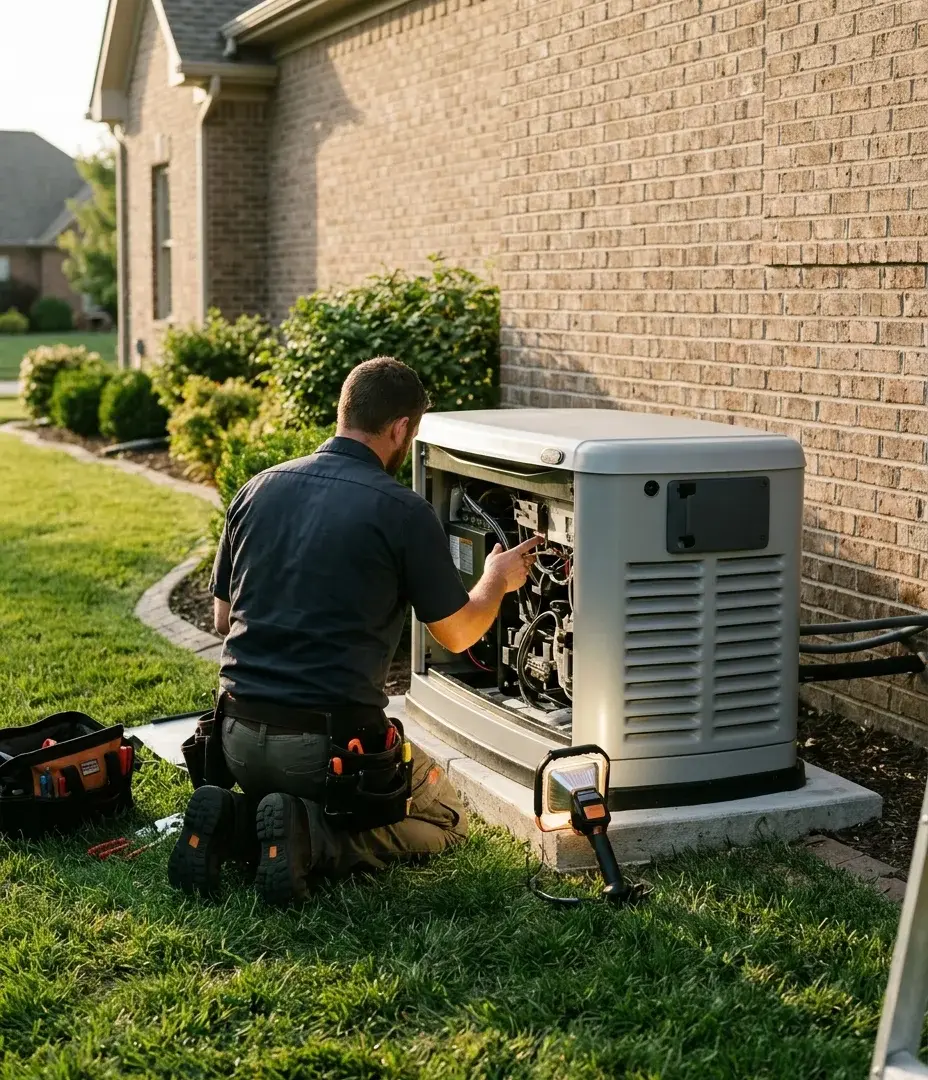
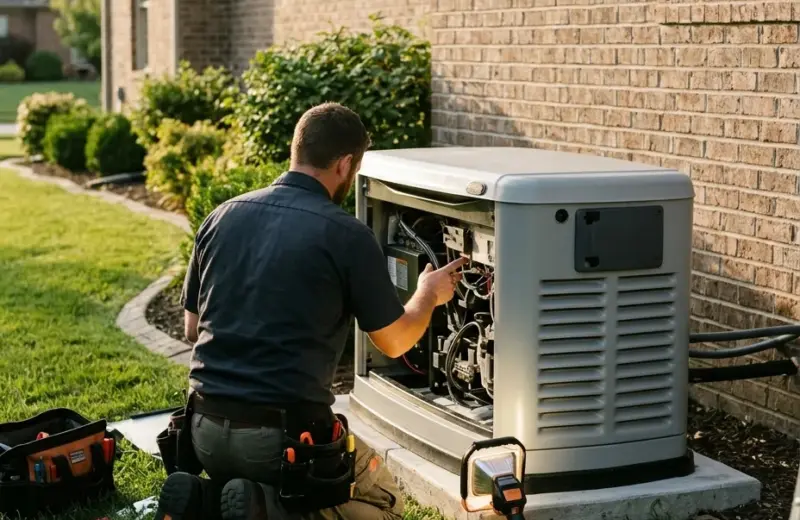
A standby generator sits on a pad outside the house, usually near the gas meter or propane tank. It runs on natural gas or propane, so there’s no fuel to haul. When the utility power drops, an automatic transfer switch senses it, starts the generator and moves your circuits over. When the power comes back, it switches you back and shuts the generator down.
Standby units can be sized to run the circuits you care about most, or the whole house. They cost more and take more planning. The install involves a concrete or composite pad, a gas line, the transfer switch and wiring to your panel. The unit also needs proper clearance from windows and doors. Permits are usually required for this kind of work.
For people who travel, have someone at home on medical equipment, or just don’t want to deal with a generator in the middle of a storm, a standby unit is often worth a look.
Transfer switches and interlocks
Any generator that feeds your home’s wiring needs a safe way to connect. There are two common options for a portable:
- A manual transfer switch. A small panel next to your main panel with the circuits you want to back up. You plug the generator into an outside inlet and flip the switch.
- A panel interlock. A metal plate on your main panel that makes it impossible to have the main breaker and the generator breaker on at the same time. The generator plugs into an inlet box outside.
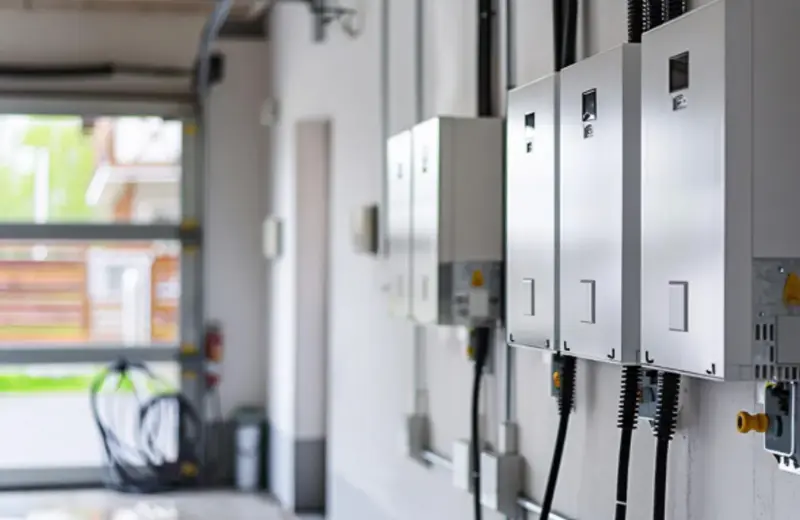
Both do the same important job. They keep generator power from flowing back out to the utility lines, and they keep utility power from hitting your generator when the lights come back on. A standby generator uses an automatic transfer switch that does this for you.
Never backfeed through a dryer outlet
Some people try to skip the inlet and interlock by making a cord with a plug on both ends and running the generator into a dryer outlet or another 240 volt receptacle. Please don’t do this.
A cord like that has live, exposed prongs on one end whenever the generator is running. If the main breaker is still on, your generator sends power back out through your meter and onto the lines in the street. The transformer can step that up to a dangerous voltage, and a lineworker who thinks the line is dead can be badly hurt or killed. When utility power returns, it can also damage the generator, your wiring or both, and start a fire. It also breaks the rules your power company sets for connecting a generator.
Picking the right size
Start with a list of what you want running during an outage. A typical list looks like this:
- Refrigerator and freezer
- Well pump, if you’re on a well
- Some lights and outlets
- Furnace fan, or one or more heat pumps or AC units
- Medical equipment, a sump pump or a garage door
Motors like well pumps and AC compressors draw a lot more power for a moment when they start. That starting load matters as much as the running load when you size a generator. An electrician can look at your panel and your list and tell you what size makes sense.
Talk it over before storm season
Church Electrical Services installs inlets, interlocks, transfer switches and standby generators for homes around Vanceboro and across Eastern North Carolina. We’re licensed and insured with more than 30 years in the trade. Give us a call and we’ll go over the options for your house and give you a free written estimate before any work starts.