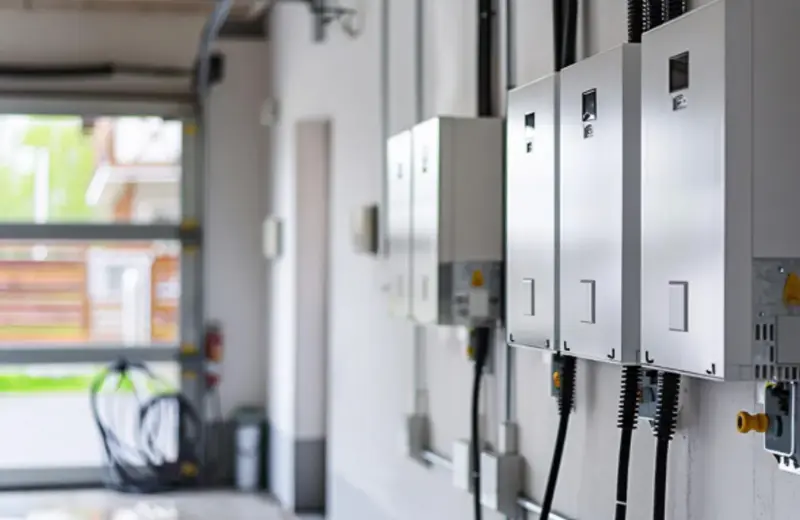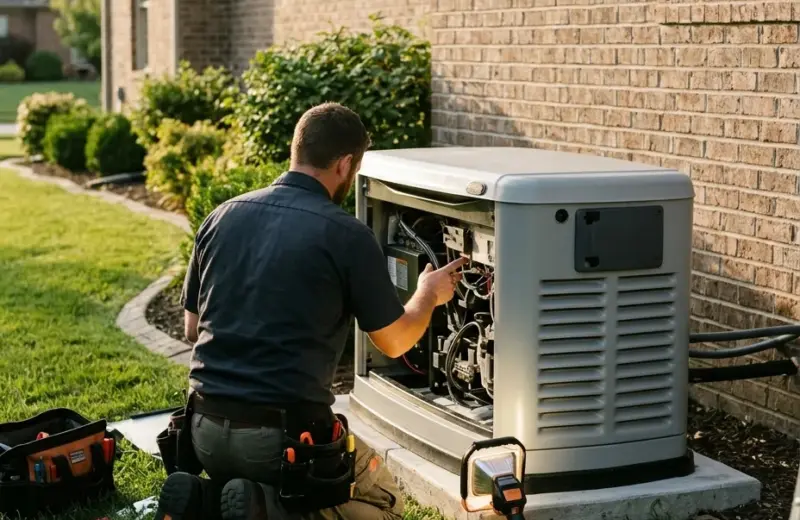
Your electrical panel is the gray metal box where the power comes into the house and gets split up into circuits. Most people never think about it until a breaker trips. That’s fine for a while, but panels get old, and houses change around them. A panel that handled a house in the 1980s may be struggling with what the same house runs today.
Breakers that trip over and over
A breaker that trips once in a while is doing its job. It shuts off a circuit that’s carrying more than it should. A breaker that trips every time the microwave and the toaster run together, or every time the space heater kicks on, is telling you something. Sometimes the fix is as simple as moving a load to another circuit or adding a new one. Other times the whole panel is maxed out and there’s nowhere to put another circuit.
Don’t keep resetting a breaker that trips right away, and never swap in a bigger breaker to make it stop. The breaker is sized to protect the wire behind it. A larger breaker on the same wire lets that wire overheat inside your walls.
Warning signs you can see, hear or smell
Some problems show up without any testing at all. Call an electrician soon if you notice any of these:
- A panel cover or breaker that feels warm to the touch
- A buzzing or crackling sound coming from the panel
- A burning or hot plastic smell near the panel or an outlet
- Scorch marks, melted spots or rust inside or around the box
- Lights that dim or flicker when a large appliance starts
Our humid summers and the storms that come through this part of the state can push moisture into a panel, especially one mounted outside or in a garage or crawl space. Corrosion on breakers and bus bars can keep breakers from working the way they should. If your panel ever sat in flood water, have it checked before you trust it again.
Fuse boxes and older panels
Plenty of older homes around Craven County still have a fuse box, or a small breaker panel that was put in decades ago. A fuse box isn’t dangerous just because it’s old. The trouble is that many of them were sized for a house with far fewer appliances, and it’s easy for someone to put in a larger fuse than the wire can handle.
A few panel types from decades past have a reputation for breakers that don’t trip reliably. If you’re not sure what you have, take a picture of the label inside the panel door and show it to an electrician. Insurance companies sometimes ask about fuse boxes and certain older panels too, so it’s worth knowing before you shop for a policy or sell the house.
You’re adding something big
A lot of panel upgrades start with a new purchase. Some of the common ones:
- A heat pump replacing an older furnace or window units
- An electric water heater, range or dryer
- A Level 2 charger for an electric vehicle
- A generator hookup, or a hot tub or pool equipment
- A finished bonus room, addition or detached shop
Before any of these go in, an electrician should do a load calculation. That’s a look at everything the house already runs and what the new equipment will add. Sometimes the existing service has room. Sometimes it doesn’t, and it’s much better to find out before the new unit is sitting in the driveway.
A panel that’s full of tandem breakers, or one with no open spaces left, is another sign. It usually means circuits have been squeezed in over the years with no real plan.
What an upgrade involves
An upgrade can mean a new panel on the same size service, or it can mean a larger service with a bigger panel, meter base and service entrance wiring. Which one you need depends on your house and what you plan to run. When the service size changes, the work usually needs a permit and an inspection, and the power company has to disconnect and reconnect the service where needed. We handle that coordination as part of every panel upgrade we do.
Most panel swaps mean the power is off for part of a day. We’ll tell you ahead of time so you can plan around it.
Getting it looked at
If any of this sounds like your house, Church Electrical Services can come out and take a look. We’re licensed and insured, based in Vanceboro, and we’ve worked on homes across Eastern North Carolina for more than 30 years. You’ll get a free written estimate before any work starts, along with a plain answer about what your panel needs and what it doesn’t.