More people in Eastern North Carolina are buying electric cars and plug-in hybrids, and the first thing most of them ask is how to charge at home. You can plug most electric cars into a regular household outlet. It works, but it’s slow. For a lot of drivers, especially anyone with a longer commute out here, a Level 2 charger is the better fit.
Level 1 and Level 2 charging
Level 1 charging uses a standard 120 volt outlet and the cord that usually comes with the car. It adds range slowly, and it may not fully recharge the battery overnight if you drive a lot.
Level 2 charging runs on 240 volts, the same kind of power your electric dryer or range uses. It charges much faster, so most drivers can start each morning with a full battery. A Level 2 charger needs its own dedicated circuit run from your panel.
The U.S. Department of Energy has a good overview of charging an electric car at home if you want more background on charging options.
Your panel comes first
Before anything else, an electrician should look at your electrical panel and service. A Level 2 charger is a large load that can run for hours at a time. If your house already has an electric range, dryer, water heater and heat pump, there may not be much room left.
We do a load calculation to see what your service can handle. There are a few ways it can turn out:
- Your panel has room, and the charger goes on a new circuit
- Your panel can handle a smaller circuit, so the charger is set to a lower output
- A load management device lets the charger share capacity with other large appliances
- Your service needs an upgrade before the charger can go in
It helps to know this before you buy a charger or the car, so you’re not surprised later.
Picking the circuit size
The right amperage depends on two things: your car and your panel. Every electric car has an onboard charger with a maximum rate it will accept. If your car can only take so much, a bigger circuit won’t charge it any faster. On the other hand, your panel may limit what we can safely add.
Many chargers can be adjusted to a lower setting, which gives some flexibility. Under current electrical code, an EV charger counts as a continuous load, so the circuit has to be sized with extra room above what the charger draws. We match the wire, the breaker and the charger setting to each other.
Hardwired or plug-in
Some Level 2 chargers plug into a 240 volt outlet. Others are hardwired straight to the circuit. A hardwired charger has fewer connection points to wear out and can often run at a higher setting. A plug-in unit is easier to take with you if you move.
If you go with a plug-in charger, the outlet should be a heavy duty one made for the job. Cheap receptacles can overheat under hours of steady charging. Current electrical code may also require GFCI protection on that outlet, depending on where it’s installed.
Where the charger goes
Think about where you park and which side of the car the charge port is on. The charger should be close enough that the cable reaches without stretching across a walkway. A few other things to check:
- How far the spot is from your panel, since a longer run means more wire and more labor
- Whether an outdoor location needs a charger rated for outdoor use
- Whether the cable will be in the way of a garage door, a mower or foot traffic
- If you might add a second electric car later
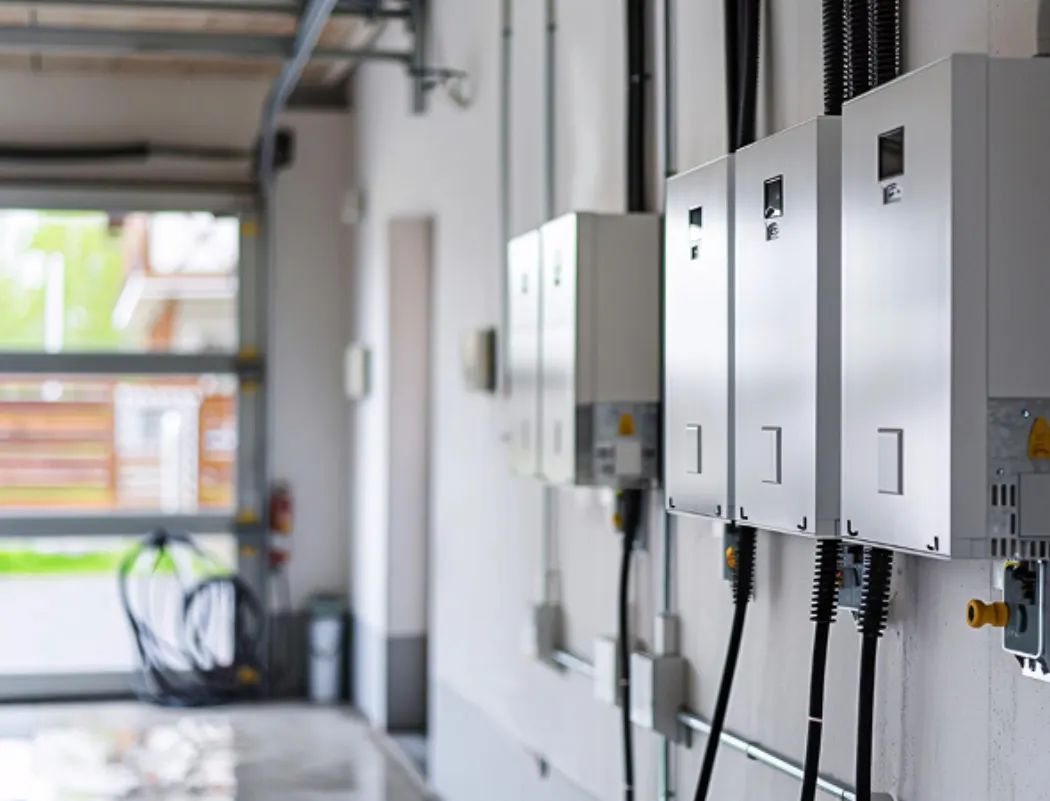
A garage wall near the panel is often the simplest install. A detached garage or a carport out by the driveway can work fine too. It just takes more planning to get power out there.
Permits and getting started
A new 240 volt circuit for a charger usually needs a permit and an inspection, and a service upgrade almost always does. We pull the permit when the job needs one and coordinate with the power company where needed.
Church Electrical Services is a licensed and insured electrical contractor based in Vanceboro, with more than 30 years of residential, commercial and industrial work. If you’re planning on an electric car, see our EV charger installation service or give us a call. We’ll look at your panel and your parking spot and give you a free written estimate before any work starts.